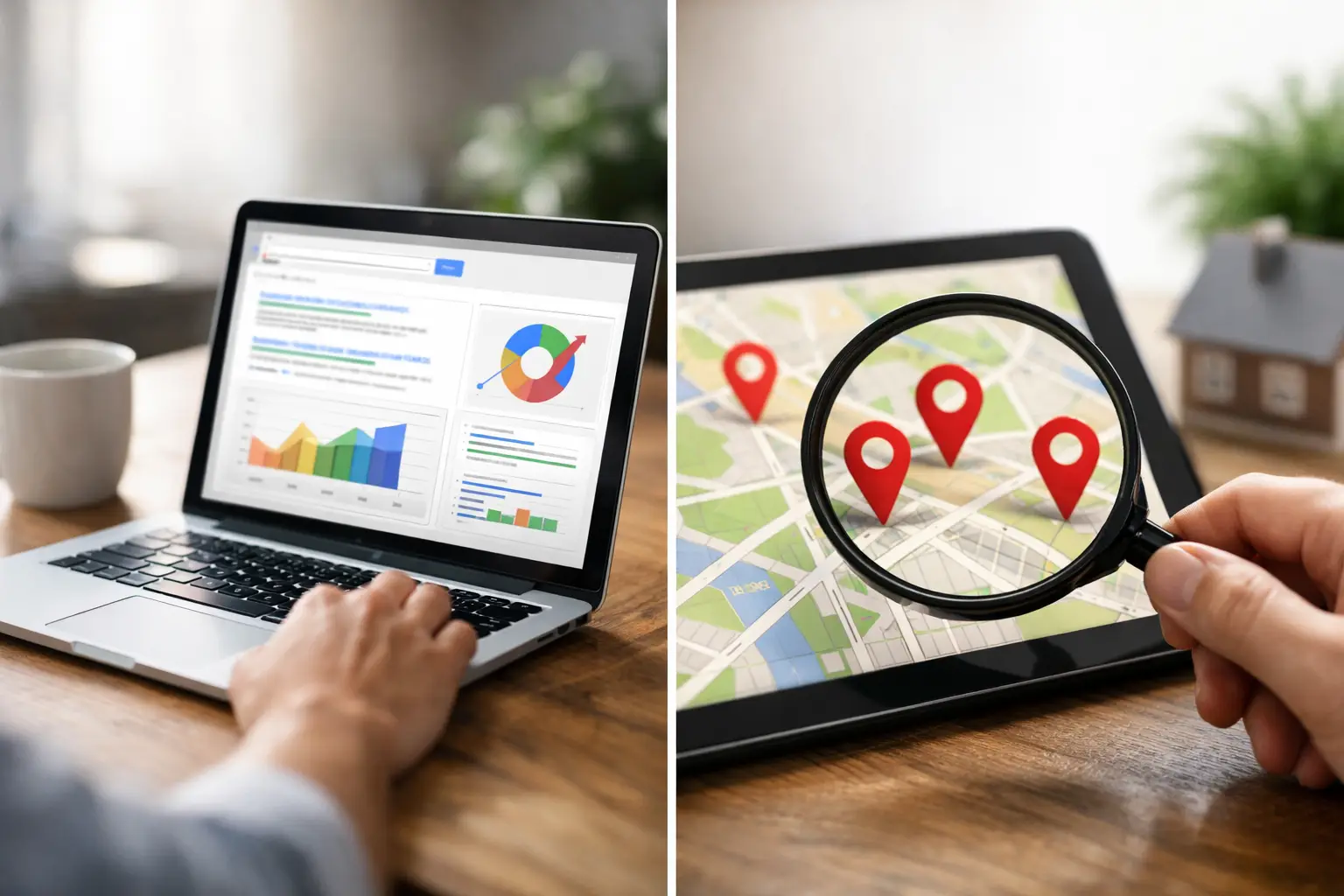
A Raleigh business owner can burn through a month of ad spend in a week and still have the same problem on Friday: not enough qualified leads. That is usually when the real question shows up – should you be putting money into google ads or local seo?
The honest answer is not whichever tactic sounds smarter in a sales pitch. It is whichever channel matches your timeline, your margins, your market, and what your website is actually built to do once traffic arrives. If you need leads fast, the answer may be different than if you want lower acquisition costs six months from now. And if your site does not convert, neither channel will save you.
Google Ads or Local SEO: What are you really choosing?
Most business owners think they are choosing between speed and savings. That is partly true, but the decision runs deeper.
Google Ads buys immediate visibility. You can show up for high-intent searches quickly, test offers, target service areas, and control budget with precision. It is a strong fit when you need demand now, when your market is competitive, or when you are launching a new service and cannot wait for rankings to mature.
Local SEO builds organic visibility over time. It helps your business appear in map results, local searches, and organic listings when people look for providers nearby. Done right, it compounds. You are not paying for every click, and that matters when lead costs start creeping up in paid channels.
The mistake is treating them like interchangeable traffic sources. They work differently, and they ask different things from your business.
When Google Ads makes more sense
If your sales pipeline is thin right now, Google Ads often gives you the fastest path to lead flow. That speed matters for contractors, law firms, med spas, home service companies, and other businesses where one good lead can justify meaningful ad spend.
Ads also help when search competition is stacked against you organically. If larger local brands have owned the map pack and top organic positions for years, trying to outrank them overnight is fantasy. Paid search lets you compete for attention while your longer-term visibility catches up.
There is also a testing advantage. Ads can tell you which services, offers, and keywords actually produce calls and form fills. That data is not just useful for PPC. It can sharpen your website messaging, improve landing pages, and even shape your local SEO strategy.
That said, Google Ads is unforgiving when the fundamentals are weak. If your landing page is slow, your offer is vague, or your intake process is messy, paid traffic becomes an expensive way to expose those problems. More clicks do not fix a broken funnel. They just make the leak costlier.
Google Ads can also become a treadmill. Once you stop funding the campaign, traffic drops. There is no lasting visibility from yesterday’s spend unless you used that data to strengthen your broader marketing system.
Google Ads is usually the better fit when:
You need leads this month, not next quarter. You have healthy margins and can tolerate variable lead costs. You want tight geographic targeting. Or you need fast testing before committing to a larger growth plan.
When Local SEO makes more sense
Local SEO is often the smarter move for businesses that want consistent visibility without paying for every visitor forever. If people search for your services with location intent, and especially if they compare multiple nearby providers, local SEO can become one of your most valuable lead channels.
This is particularly true for established businesses with a real local footprint, solid reviews, and patience to build momentum. A well-optimized Google Business Profile, strong location pages, accurate citations, quality backlinks, and a technically sound website can create a durable advantage.
What makes local SEO attractive is the compounding return. A page that ranks well can keep generating calls and leads long after the initial work is done. Your cost per acquisition often improves over time, especially compared to ad markets where every competitor keeps bidding prices up.
But local SEO is not free, and it is not quick. It takes strategy, execution, and consistency. It also depends on trust signals you cannot fake well for long – reviews, relevance, site quality, local authority, and user experience.
If your business just opened, if your website is thin, or if your market is crowded, local SEO may take longer than you want. That does not mean it is the wrong move. It means you need realistic expectations and a plan built around growth, not wishful thinking.
The real trade-off: control versus compounding
Google Ads gives you more control today. You choose the budget, the keywords, the schedule, the geography, and often the landing page experience. If you need to turn volume up or down, you can do that.
Local SEO gives you more compounding value over time. Rankings and map visibility are less direct to control, but the upside is stronger efficiency if you build authority and maintain it.
This is why the question is rarely just google ads or local seo in the abstract. It is really this: do you need immediate lead generation, long-term cost efficiency, or both?
For many businesses, the answer changes by stage.
A newer company may need ads first because it lacks authority and needs inquiries now. A mature business with strong reviews may benefit more from doubling down on local SEO because it already has the ingredients to win organic traffic. A company entering a new service area may use ads to validate demand while building localized organic pages in the background.
Why your website decides whether either channel works
Here is the part too many agencies skip because it is less glamorous than talking about traffic. If your site does not convert, you are not choosing between two growth channels. You are choosing between two ways to waste attention.
A good local ranking means little if the page feels generic, slow, or untrustworthy. A paid click is not valuable if the visitor lands on a page that does not clearly answer who you help, what you offer, why you are credible, and what to do next.
This is where serious growth work separates itself from tactic chasing. Design, messaging, usability, calls to action, trust signals, and conversion paths all shape ROI. A business website should act like a sales engine, not an online brochure with a contact form hidden in the corner.
That is why Capstone Design Group approaches traffic channels as part of a larger lead-generation system. The goal is not to get you more visits and hope for the best. The goal is to turn visibility into revenue.
A smarter way to decide between Google Ads and Local SEO
Start with your timeline. If your team needs opportunities now, paid search deserves serious attention. If you can invest with a six to twelve month view, local SEO often pays off in a bigger way.
Then look at your margins. Businesses with high customer value can usually absorb paid acquisition more comfortably. If every sale has thin margins, long-term organic efficiency becomes much more attractive.
Next, review your market behavior. If people search for urgent service and want help immediately, ads can capture that intent fast. If they compare providers, read reviews, and check map listings before making contact, local SEO becomes critical.
Finally, audit your website and follow-up process. Can your pages convert traffic? Are calls answered? Are leads tracked? Can you tell which channel produced revenue, not just clicks? If the answer is no, fix that first or at least fix it alongside your campaign strategy.
The best answer is often both, but not equally
Yes, many businesses should invest in both. But that does not mean splitting the budget down the middle and calling it strategy.
A stronger approach is to use Google Ads for immediate lead capture and market testing while building local SEO as a durable asset. Over time, as organic visibility improves, you can reduce pressure on paid spend, refine targeting, and use ads more selectively for high-value services, promotions, or expansion areas.
That mix gives you short-term momentum and long-term leverage. It also protects you from overreliance on one channel. If ad costs spike, your organic presence helps stabilize lead flow. If rankings fluctuate, paid campaigns can fill the gap.
What matters is sequencing and execution. Throwing money at ads without conversion strategy is reckless. Waiting on local SEO without a near-term lead plan can stall growth. Smart businesses build both channels around real business goals, clean reporting, and a website that can carry the load.
If you are stuck between google ads or local seo, stop looking for the universally correct answer. There is not one. There is only the right fit for your stage, your goals, and the revenue model behind your business. Pick the channel that solves today’s problem without creating tomorrow’s bottleneck, and make sure the traffic has somewhere worth landing.