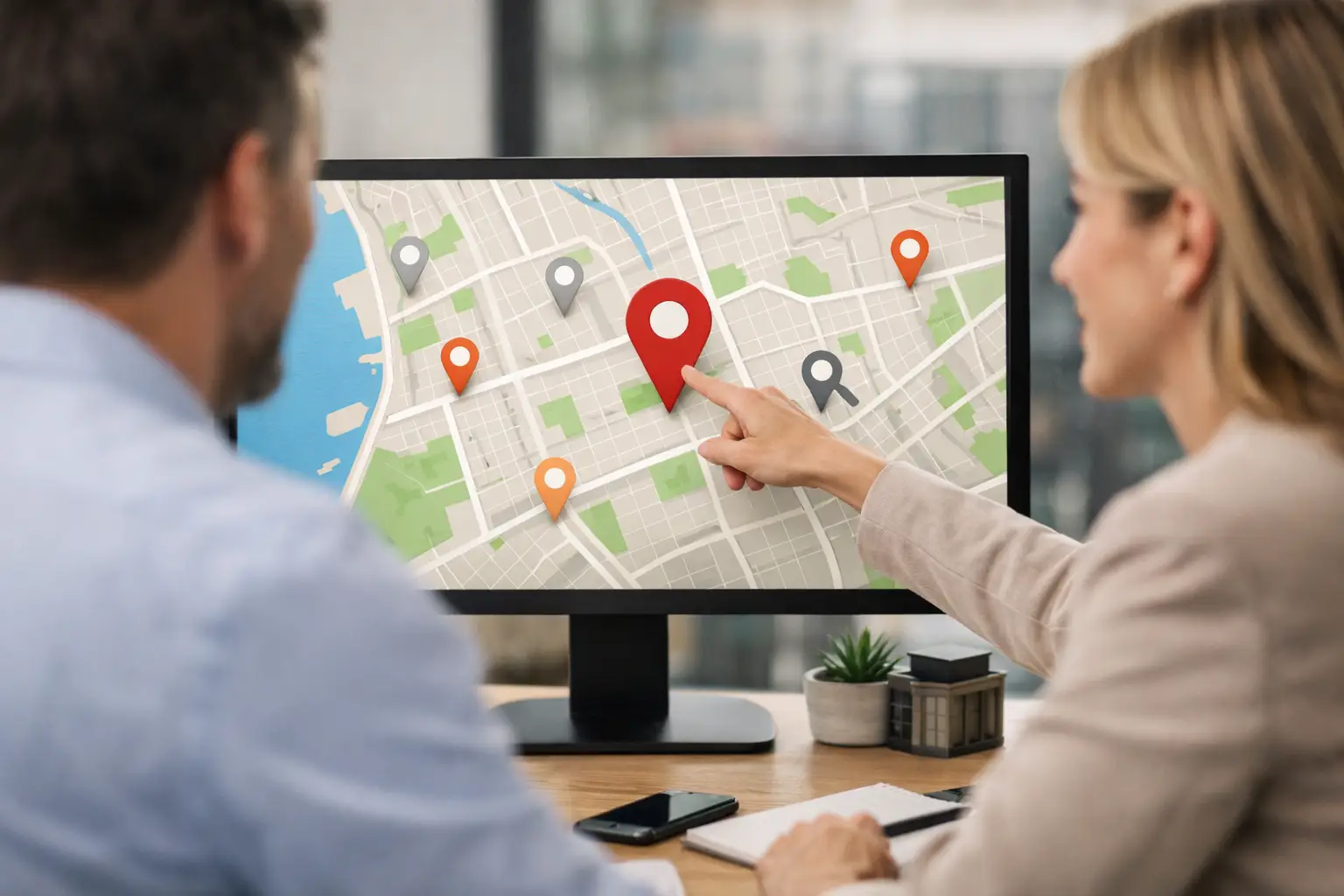
If your business shows up on page two when a nearby customer is ready to buy, you are not just missing traffic. You are losing calls, form fills, foot traffic, and revenue to competitors who look easier to trust. That is why businesses that want steady lead flow need a clear plan to improve local search visibility, not just a half-finished profile and a few directory listings.
Local SEO gets treated like a side task. It is not. For service businesses, medical practices, home service companies, professional firms, and multi-location brands, local search often sits right at the bottom of the funnel. These are not casual browsers. These are people searching with intent, often on a phone, often ready to act the same day.
What local visibility actually means
When people talk about local SEO, they usually mean one thing: ranking in the map pack. That matters, but it is only part of the picture. Local visibility also includes organic rankings for city and service terms, branded searches, review presence, and how persuasive your listing looks when people compare options.
A business can rank reasonably well and still underperform. Maybe the listing has weak reviews. Maybe the website loads slowly. Maybe the page title is vague, the service pages are thin, or the phone number is hard to find. Visibility is not just where you appear. It is how convincingly you show up.
The fastest way to improve local search visibility
If you want the shortest path to better local performance, start with the assets Google already trusts most: your Google Business Profile, your website, and your citation consistency. Those three work together. If one is weak, the others have to carry too much weight.
Your Google Business Profile needs complete and accurate information. That sounds obvious, but plenty of businesses still have the wrong primary category, outdated hours, missing services, weak descriptions, or no recent photos. Those gaps matter because Google is trying to match search intent with the most relevant and credible local result.
Category selection is a big one. Your primary category should reflect your highest-value core service, not a broad label that feels safe. Secondary categories can support related offerings, but the main category sends a strong relevance signal. Get that wrong, and you make ranking harder than it needs to be.
Reviews also carry more weight than many owners realize. Not just the number of reviews, but the pace, quality, and language inside them. A steady stream of reviews that mention specific services and locations can reinforce local relevance. A profile with old reviews and no responses looks neglected, even if the business itself is excellent.
Your website has to support the local ranking story
A lot of companies expect their listing to do all the work. It will not. Google uses your site to verify who you are, what you do, and where you do it. If your website is vague, generic, or built around design trends instead of conversion logic, local rankings and lead generation both suffer.
Start with your core service pages. Each major service should have its own page with clear messaging, real substance, and language that matches how customers search. If you serve Raleigh, Durham, Cary, and Chapel Hill, your site should not bury that information in the footer and hope for the best.
That does not mean cranking out thin city pages stuffed with place names. Google is better than that now, and users are definitely better than that. Location pages need a reason to exist. They should speak to the service in that market, reflect the local audience, and make it easy for someone to take the next step.
Local search visibility improves when your website does three things well at the same time: it signals relevance, builds trust, and converts interest into action. Many agencies focus on the first part and ignore the rest. That is how businesses end up with traffic reports that look fine and pipelines that still feel empty.
The local SEO signals that most businesses overlook
There are a few high-impact details that often get skipped because they are less visible than rankings. They still matter.
First, your NAP data – name, address, and phone number – needs to be consistent across your website, business listings, and major directories. Small differences can create trust issues for search engines. One suite number mismatch will not destroy your business, but widespread inconsistency adds friction.
Second, your website should include local business schema where appropriate. Structured data helps search engines understand your business details more clearly. It is not a magic button, but it supports the bigger picture.
Third, your site speed and mobile usability matter more in local search than many owners expect. Local searches often happen on mobile devices in moments of urgency. If the site loads slowly, if the call button is awkward, or if the form is a chore, your conversion rate drops even if rankings improve.
Fourth, your content needs local intent baked in. That does not mean every blog post has to mention your city five times. It means your content strategy should support the real questions and service needs people in your market have. A strong FAQ section, well-written service pages, and useful supporting content can reinforce topical authority over time.
How reviews shape rankings and revenue
Reviews influence both discovery and decision-making. They help search engines assess prominence, and they help real people decide whether to contact you or keep scrolling.
The mistake is treating reviews as a passive outcome. If you do good work, ask for the review. Build the ask into your process. Train your team. Follow up after successful projects. Make it easy. Businesses that consistently generate reviews usually are not luckier. They are simply more disciplined.
You also need to respond. A thoughtful response shows activity, professionalism, and care. It will not erase a bad review, but it can soften the impact and demonstrate that your company is engaged. Silence sends the wrong message.
There is a trade-off here. Aggressive review campaigns can backfire if they feel forced or if you ask at the wrong moment. Timing matters. The best request is usually made right after a positive outcome, when the value is fresh and the customer feels it.
Why location pages work – and when they do not
Location pages are one of the most misunderstood parts of local SEO. Done well, they help businesses rank for service-plus-city searches and create a better experience for users who want confirmation that you serve their area. Done badly, they become duplicate filler that adds no value.
A useful location page includes specific service information, proof points, local context, clear calls to action, and content that is meaningfully different from other city pages. If every page says the same thing with only the city name swapped, that is not strategy. That is padding.
This matters even more for businesses with multiple locations or broad service areas. You need a structure that reflects reality. If you have physical offices, those pages should be distinct and tied to real business data. If you travel to customers, your pages should make that service model clear.
The real goal is not ranking. It is qualified leads.
This is where many local SEO conversations go sideways. A higher map position feels good, but rankings are not revenue. If your listing gets impressions but no action, the problem may be your offer, your messaging, your website, or the trust signals on the page.
That is why the best local SEO strategy is tied to conversion strategy. Your phone number should be obvious. Your calls to action should be clear. Your forms should ask for the right information without making people jump through hoops. Your website should answer the questions people ask before they are ready to contact you.
At Capstone Design Group, that is the difference between chasing visibility and building a lead-generation system. Local SEO works best when it is connected to strong messaging, solid web performance, and a site designed to convert, not just exist.
A smarter way to improve local search visibility over time
Local SEO is not a one-and-done checklist. It is an ongoing trust-building process. Competitors update their profiles. Reviews change. Search behavior shifts. Google adjusts how it weighs signals. If you stop maintaining the system, momentum fades.
A practical long-term rhythm looks like this: keep your business profile active, earn reviews consistently, publish or improve service content, monitor ranking and lead trends, and fix technical issues before they become expensive. Not glamorous, but effective.
There is also an honesty check every business owner should make. If your local visibility is weak, the answer may not be one missing tactic. It may be that your digital presence is fragmented. The listing says one thing, the website says another, and the user experience does not inspire confidence. In that case, the fix is not a quick patch. It is alignment.
When local search works, it feels simple to the customer. They search, they find you, they trust what they see, and they reach out. Behind that simplicity is a strategy that connects relevance, authority, usability, and conversion. Get those pieces working together, and local visibility stops being a vanity metric. It becomes a dependable source of growth.
The businesses that win local search are rarely the ones doing flashy marketing. They are the ones showing up clearly, consistently, and convincingly where buying decisions actually happen.